| IN FOCUS Color Science |
|
|
For this In Focus, the subject chose itself. Whatever else people say about Pixii, they keep coming back to the color. |
Every camera has its own color signature — much the way chemistry gave each film stock its own palette. That signature is something like the soul of the camera, and over the years photographers have given it a character all its own, sometimes a contradictory one. Pixii's colors are distinctive enough to have earned the same treatment — described in freshly coined terms, or in words borrowed from cameras of a similar character: “absolutely delightful colors,” “vibrant,” “3D pop,” photos people say have “a certain feel about them.” The vocabulary of film, of tones and roll-off, even of the old CCDs. Where does that signature come from? Can you find other tones in it, the way you once chose a film stock? What gives Pixii its soul? Let me pull back part of the veil. |
A sensor is colorblind: each photosite only counts light, not color. Color comes from the Bayer filter laid over it — a mosaic of red, green and blue windows, twice as many green as red or blue, because green is where the eye is most sensitive. From that mosaic the camera has to reconstruct a full color for every pixel. That's what sets the basic shape — and its limits: how finely the sensor can tell one tone from its neighbor depends entirely on where those filtered responses land. Left as they are, they aren't a picture yet: the raw file lives in the sensor's own color space, a greenish world with the blues pulled low. Turning that into an image you'd want to keep is the whole game. |
Approximations, and the signatures of the past. |
For a long time the path was a simple one — deliberately so. Digital cameras used a plain linear approximation to pull those colors back into something the eye reads as right: a set of matrices built to run on small dedicated chips (ASICs) with little power to spare, plus a white-balance correction. That's why raw conversion stayed painful for so long — either a manufacturer's own software, mostly miserable to use, or a paid suite you had to keep buying updates for with every new camera. From there it becomes a hard balancing act between several forces: · the approximations of a bluntly linear system — picture a landscape of valleys and ridges forced flat through a single plane; · the quirks of human vision, which weighs some colors more than others (greens, skies, skin tones) and reads contrast in its own way; · and the marketing bias of the early digital cameras: make pretty holiday snapshots, give people punchy colors. All of it fed the color signatures that settled in, one camera maker at a time. |
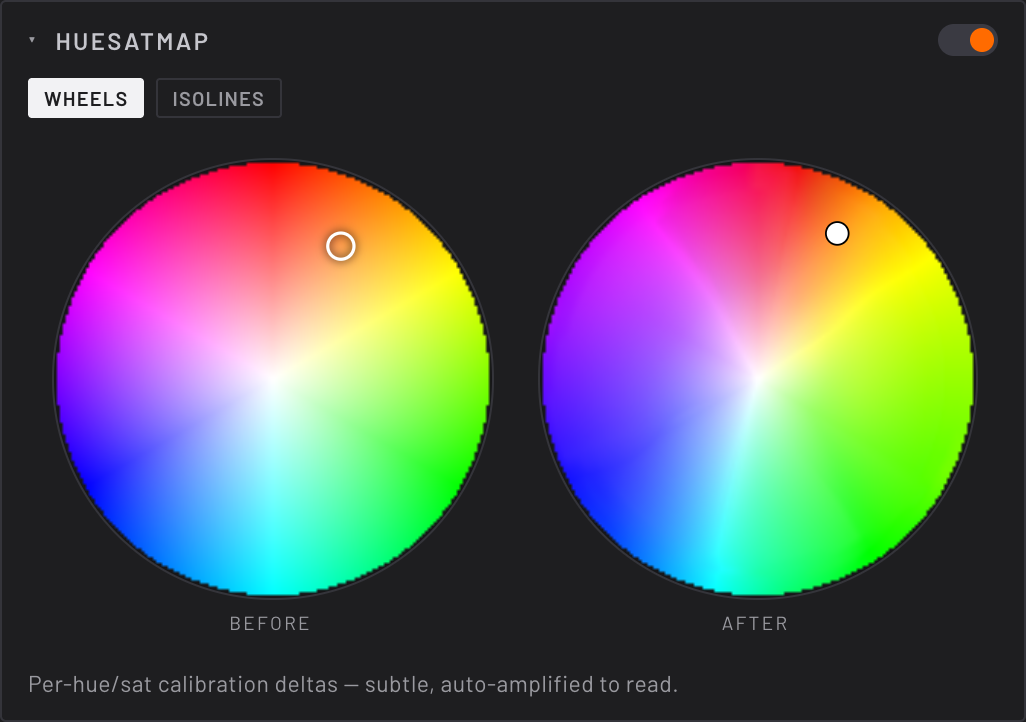
With its software-defined architecture, Pixii comes along at a moment when a modern color model can run directly in the camera — and with a history free of those old biases. Our approach, then, was to stay faithful to the physical reality of color through a complete model — matrix, LUT and tone curve — that keeps delta E as low as possible, and only then to lightly weight certain parts of the spectrum for the way we actually see. |
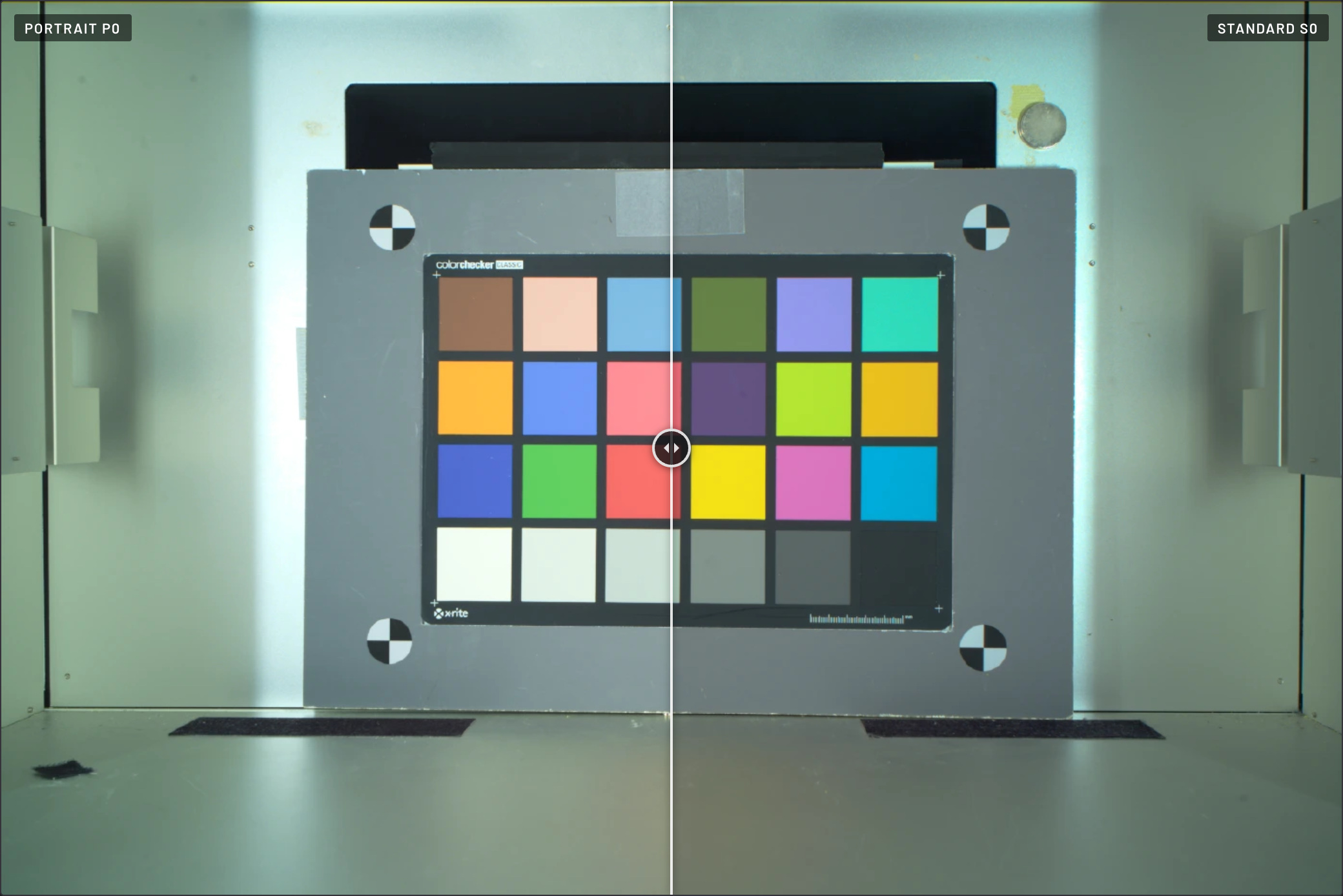
The result is the profile we call Standard: the most faithful to physical reality, with a natural look — nothing overdone, no effect layered on. It's the best base to edit from. And even though we adopted the open DNG standard, not everyone has an editing suite that can take full advantage of it. So we kept a profile called Default, which carries only the color matrices. It works fine in any DNG-compatible software — but it isn't perfect: it has the same approximations as those older digital cameras. But we didn't want to stop there, so we kept working the tones and the weightings — the “looks” — toward what certain films could do: · looks with tones more vivid than reality; · looks that favor true skin tones and calm the contrasts most cameras push up (skies, and so on); · and others that flatter landscapes, or photographs made in natural light. That's our collection of profiles, included with every camera we make. |
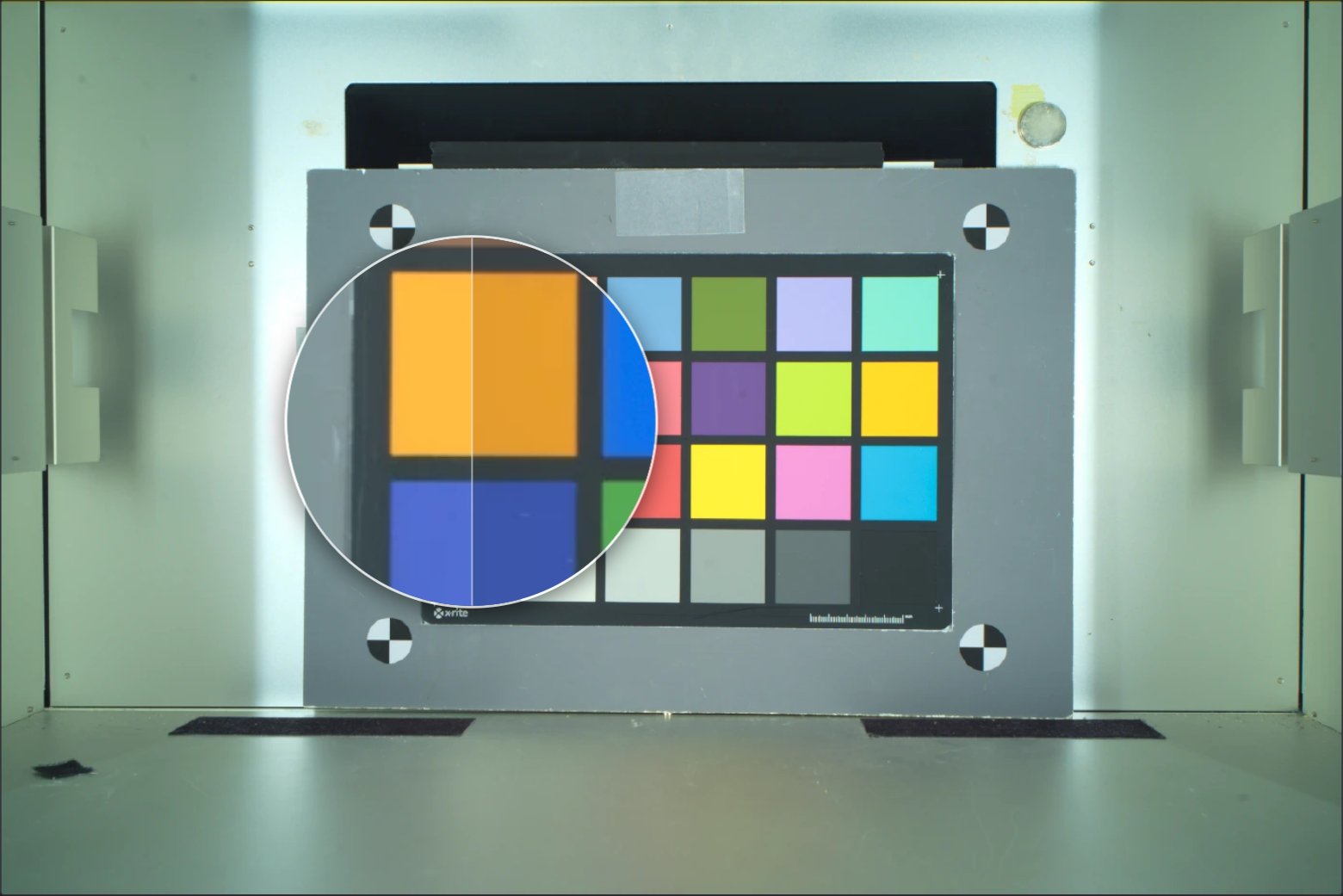
A picture is worth a thousand words. If all this still sounds nebulous, you can watch it happen for yourself. We just opened the Profile Lab. Drop in a Pixii DNG — yours, or one of ours — and it renders through every profile we ship, side by side. Try the looks against each other. Inspect the matrix, the maps and the tone curve. Then download the profiles onto your own camera, and go shoot. |
Reveal a world of colors. |
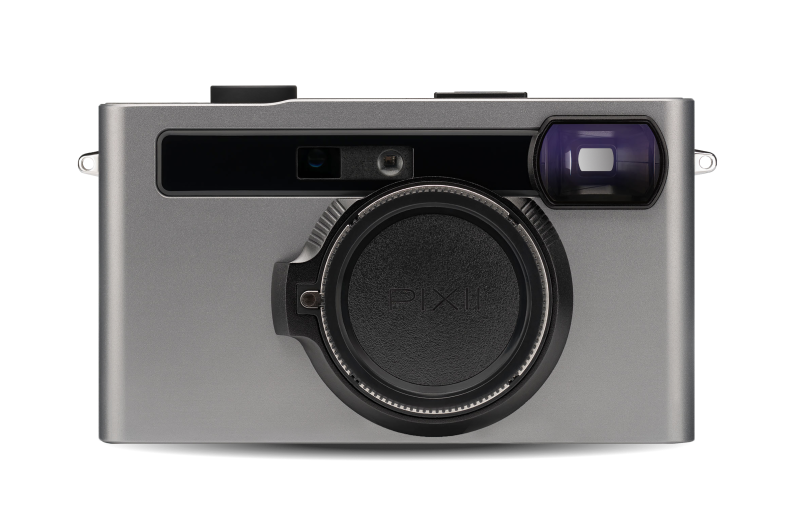
Our software-defined cameras keep getting better — new color science included, the moment we ship it. Pixii Max and Pixii+ are the best way to discover what the future holds. The latest color profiles are available of course as a free download for your Pixii camera. And if you don't own one yet — come and explore. There's never been an easier moment to start. Discover our summer prices : quality rangefinders, now within reach. Or shop our latest drop of reconditioned cameras for exceptional value, without the guesswork of buying second-hand. |
Thank you for reading. Until next time. — David & the Pixii team |
|
|